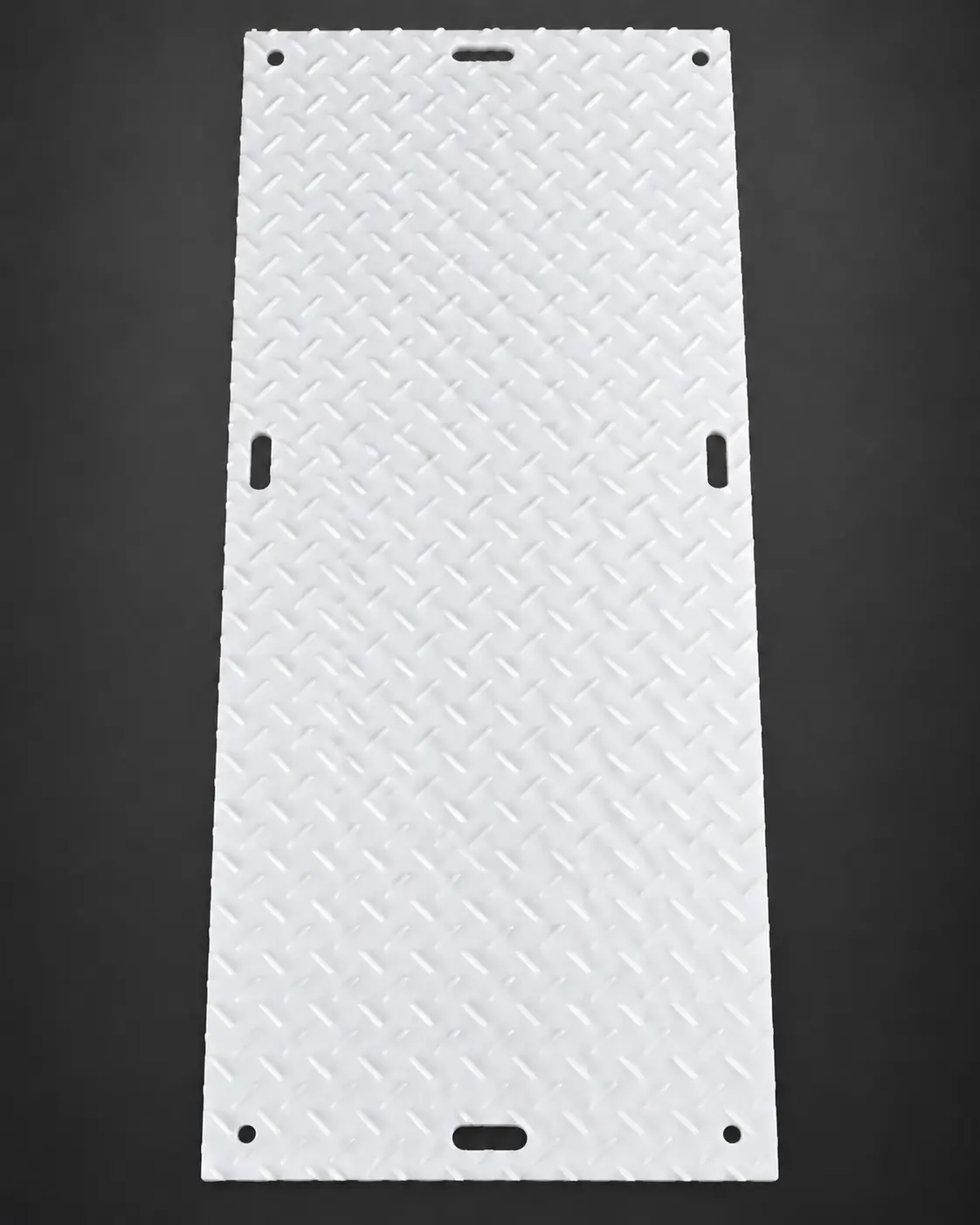
3×8: restricted access
Use the narrower panel where gates, side yards, landscaping, or other fixed features limit the route width.
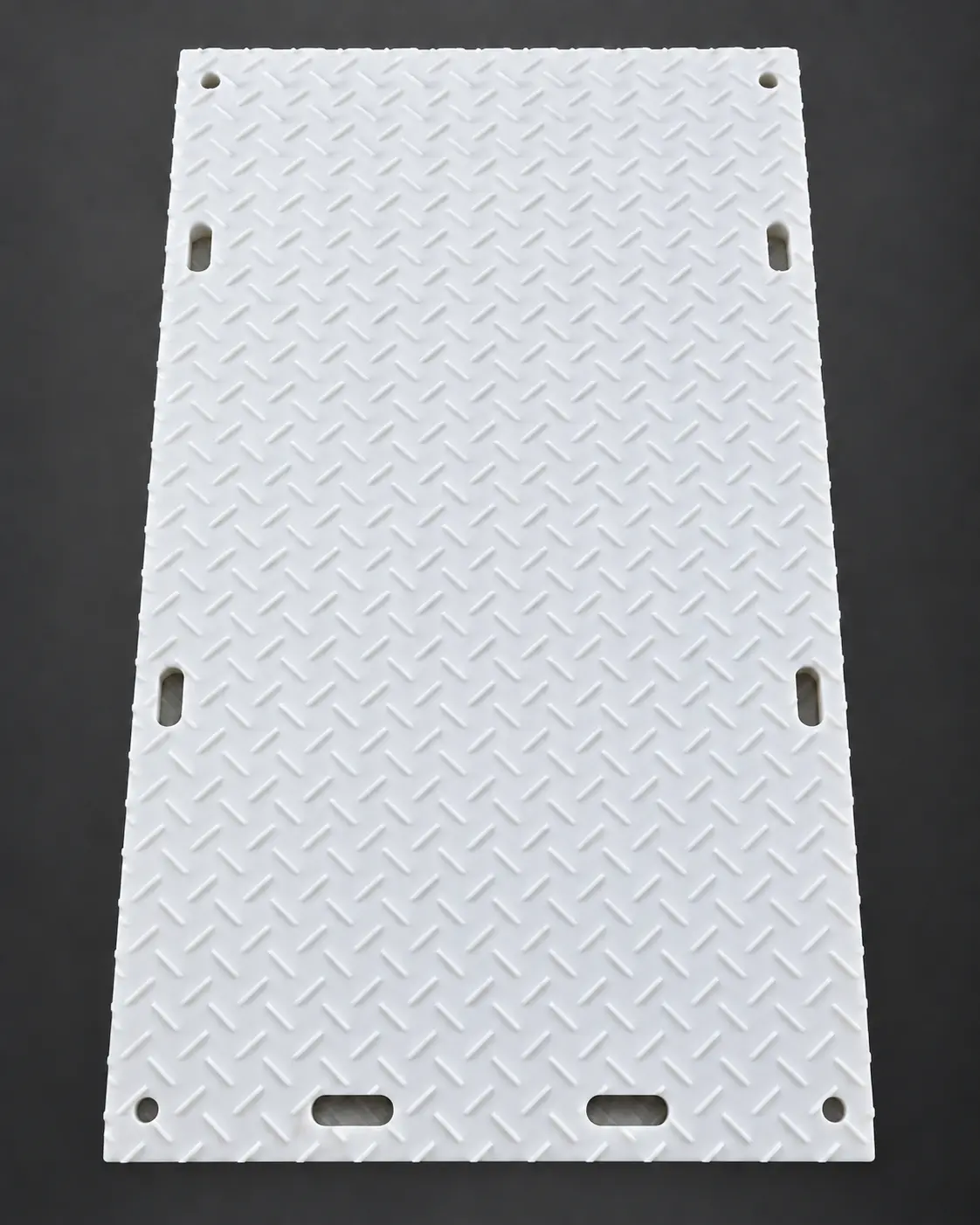
4×8: broader coverage
Use the full-size panel for main travel lanes, turns, staging areas, and work zones where the property provides enough width.
3×8 vs. 4×8 ground protection mats at a glance
Choose 3×8 mats when the entrance is the limiting factor
A route is only useful if the panels can reach the work. Measure the clear opening at every gate, post, fence return, air-conditioning unit, landscape bed, and building corner. A nominally wide side yard can still have a short pinch point that controls the entire layout.
The 3×8 mat covers 24 square feet. Its narrower width makes it practical for residential tree work, landscaping, utility access, and compact-equipment jobs where a 4-foot panel will not fit through the entrance. It is also useful when the route changes width between the driveway and work zone.
Narrow access does not mean the equipment can safely turn within a 3-foot lane. The operator still needs enough supported room for tires or tracks, attachment swing, backing, and normal steering. If the route opens beyond the gate, transition to broader 4×8 coverage instead of forcing every part of the job into the narrowest layout.
Choose 4×8 mats for main lanes, turns, and staging
A 4×8 ground protection mat covers 32 square feet. That is eight additional square feet per panel and one-third more coverage than a 3×8. Over a longer lane, the difference can reduce the number of seams and make it easier to cover the actual path the machine will use.
The 4×8 size is the better starting choice when extra coverage and turning room are important. It fits primary equipment lanes, corners, attachment-change areas, log or material staging, and working zones where the operator cannot stay on a perfectly straight line.
More surface area does not replace route planning. Measure the outside tire or track width, not just the machine body. Mark the expected turns, transitions, and backing areas. If the machine needs a wider path than one panel provides, plan a two-panel-wide section instead of hoping the operator can hold a narrow line.
Compare current 3×8 and 4×8 pricing
Both sizes use quantity pricing. Freight and applicable taxes are separate because delivered cost depends on the order quantity and destination.
On panel price alone, the 3×8 costs less. On coverage, the 4×8 provides more square footage for each piece the crew lays. The right comparison is not simply the cheapest mat; it is the order that covers the route without leaving the crew short at a gate, turn, or work zone. Review every tier together on the ground protection mats for sale page.
Why a mixed mat package often works better
Many properties have two different access problems. The crew may need to pass through a narrow gate, then cross an open lawn and build a wider work area near the tree, trench, or construction zone. A mixed set solves those problems without making one panel size do everything.
For example, an 80-foot straight route needs 10 panels end to end before adding any allowance for turns, transitions, or staging. If the first 16 feet pass through a restricted entrance, two 3×8 panels can cover that section while 4×8 panels handle the open lane beyond it. That is a planning example, not a universal order quantity; the actual layout depends on route width, equipment movement, soil, and work-zone needs.
Both GroundMats.shop sizes are double-sided HDPE panels with molded handholds and four corner holes. The shared construction makes it practical to keep both sizes in one crew system while choosing the footprint that fits each section of the property.
Measure the route before choosing a size
- Measure the narrowest gate or passage, including hinges, posts, and nearby obstructions.
- Confirm the machine’s outside tire or track width and the space required for attachments.
- Measure the full travel distance from the unloading point to the work zone.
- Mark every turn, backing area, grade change, and soft transition.
- Use 4×8 mats where broader coverage and turning room matter.
- Use 3×8 mats where the access restriction controls the panel width.
- Add panels for staging, work zones, layout changes, and route corrections.
- Check soil moisture, drainage, slopes, recent trenches, and unsupported openings.
- Request delivered pricing with the quantity, size mix, destination ZIP code, and site type.
The ground mat quantity guide explains how to count straight lanes and add coverage for turns. For placement and inspection, use the ground protection mat installation guide.
The practical takeaway
Buy 3×8 mats because a real access restriction calls for them, not because the narrower panel appears easier to steer across. Buy 4×8 mats when the crew has room and needs broader coverage for main lanes, direction changes, and work areas. If your jobs regularly move from tight entrances to open lawns, a mixed package is usually more adaptable than an all-or-nothing choice.
Once you know the route length, narrowest opening, and preferred size mix, send the quantity and delivery ZIP code for straightforward delivered pricing.